
These days smart meters have become a contentious talking point in J&K. Several political parties, social groups & individuals are seen protesting against installation of the meters. You find such protests on streets, digital media & in news papers where the consumers have one or the other form of complaint against the meters. These complaints are generally unverified & unsubstantiated, but more often than not pretty vocal & generally uninformed.
The intent through this write up is to make the electricity consumers aware of the smart meters & why they are important.
Jammu & Kashmir has a unique distinction of being a UT which has AT&C losses more than 60%. AT&C losses broadly define the aggregate transmission & commercial losses of a power utility. This is largest loss for any state/UT of India.
Financially speaking, during the year 2022/23, J&K purchased electricity from the generators to the tune of Rs. 8689 crores while as the collection from the consumers was around Rs.3608 crores, resulting in a financial gap of Rs. 4852 crores. (JPDCL contributed revenue of Rs. 2059 cr. while as KPDCL contributed Rs. 1548 cr.)
Energy consumption in Jammu province was 8460 million units while as the consumption in Kashmir was 11746 million units. The consumption is rising at the rate of 10% per year.
The UT of J&K had to take a loan of Rs. 31,000 crores upto 31st March 2023 from financial institutions to make payments to the generating companies over the last few years & this amount is regularly on the rise.
Thus, on one hand there is an effort on part of the power utilities (JPDCL, KPDCL, JKPCL & JKPTCL) to provide “adequate power supply” to the consumers while, on the other, they lose heavily on the sale of every unit of electricity! Electricity, obviously, is a commodity; a very valuable & essential commodity indeed, without which the modern day life is nothing but hell.
Thus the health of this vital sector is very important for all of us, irrespective of our position in the society.
So, the question is, how could this situation be ameliorated? Smart Meters along with the AB cables (Aerial Bunched Cables) & strict enforcement is the solution. The earliest it is done the better.
By now Jammuites are familiar with the smart meters. They can be seen in every nook & corner of the city installed on electricity poles. Around a lakh of the consumers in Jammu city have their electricity consumption measured by these intelligent devices. I am one of them & I have also switched over to prepaid plan.
Total electricity consumers in Jammu number around 11 lakh. Thus around 10 lakh more meters have to be installed. Same is the case with KPDCL.
Smart meters collect data automatically from the consumers, based on their electricity consumption & transmit it to the control centre based in Bemina, Srinagar. Jammu has a recovery data centre at Gladni. The data received from every electricity consumer is automatically processed at the data centre & bills prepared & raised. The bills are raised on monthly basis if the electricity consumer is a postpaid consumer. The consumer also has a choice to use “BillSahuliyat” application & get the bills as a soft copy. Payments can be made online using debit or credit cards or any of the prescribed digital platforms or by banking route.
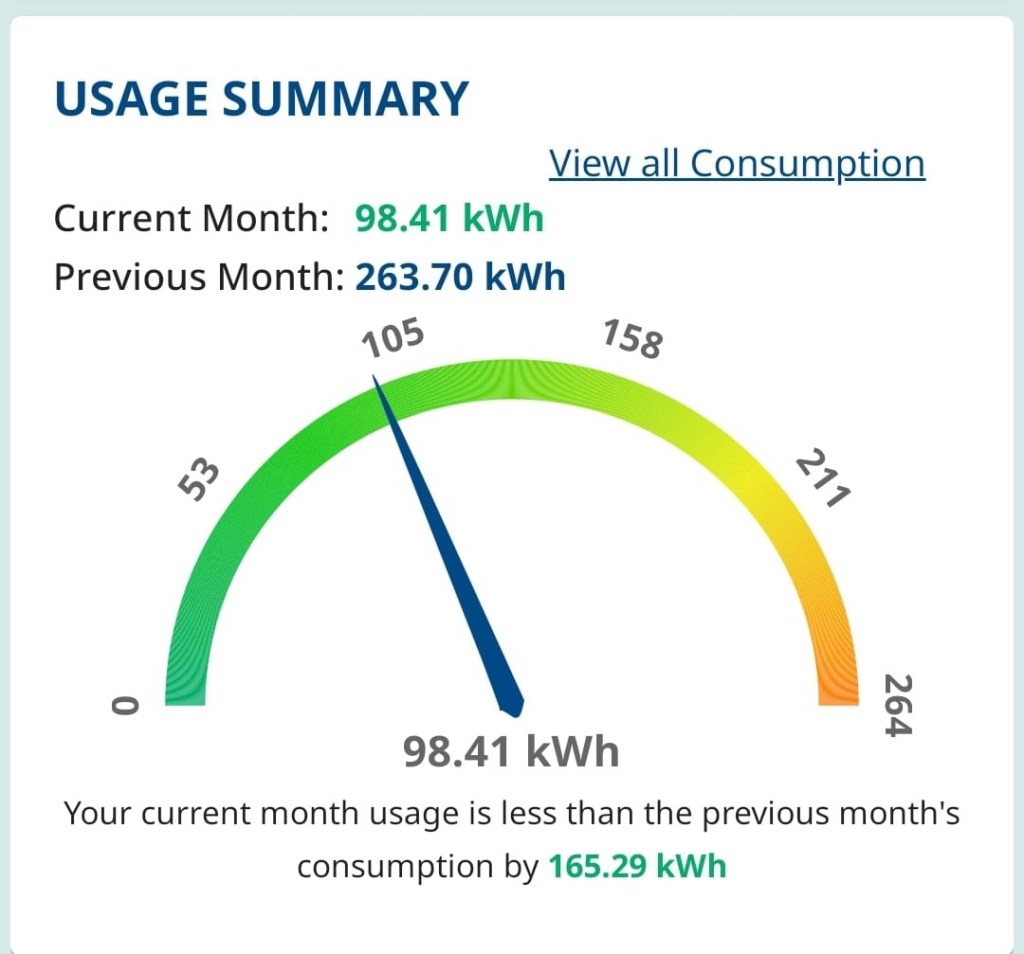
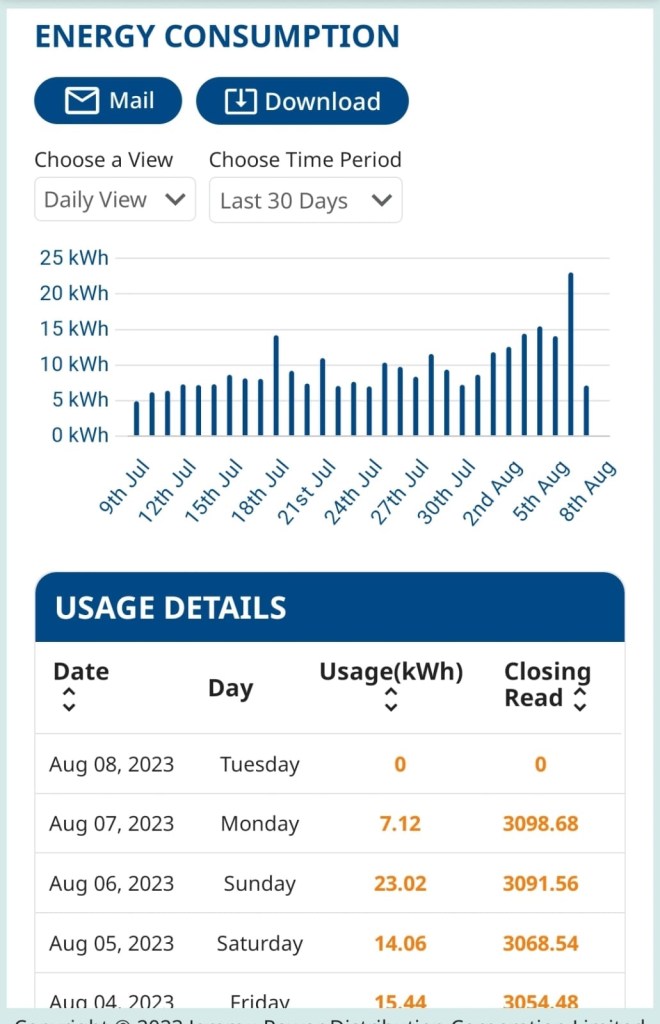
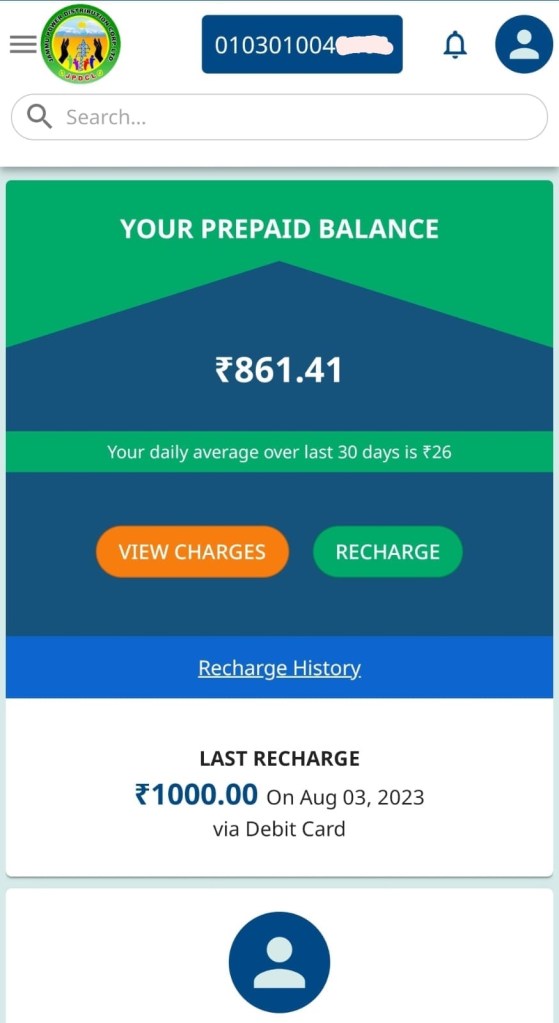
In case of prepaid consumers the data is generated on daily basis & with the help of a web based application on their smart mobile phones the consumers can keep a track of their electricity consumption as well as the actual cost of electricity consumed on daily basis. The consumer can also compare the energy consumed with respect to the previous week or the previous month & can thus manage electricity consumption based on the data available to them on their smart phone.
During the failure of communication link in a particular area the smart meter retains the electricity consumption data of the consumer in its memory & once the communication link is restored the data is transmitted to the control centre & as such there is no loss of data.
Thus, the smart meter is a proven technology. It’s been in use throughout the world since 2011.
India has installed around 67 lakh smart meters in various states/UTs of the country under the GoI’s National Smart Grid Mission. Ministry of Power, Govt of India, has sanctioned installation of 25 crore smart meters by the end of 2025 all across the country. Presently, Uttar Pradesh, with 12 lakh smart meters already in service, leads the states/UTs in installation of smart meters. UP has also placed orders for around one crore smart meters against a sanctioned number of 3.09 crores. Other states/UTs are following suit. Thus J&K is not alone in switching over to smart meters.
Smart electricity meter is a gadget from which an honest electricity consumer must have no fear. The gadget is honest, it’s reliable & any unwarranted variations in the meter readings are visible in the data centre as also on the consumers mobile. Such rare cases can always be addressed & the technology provides methods to address such situations.
Needles to say there is a lot of hard work that goes into installation & commissioning of the smart meters & their integration into the data centre. The back end process of integration of the meters leading finally to generation of electricity bills is presently an ongoing process in J&K as it is in many other parts of the country. These processes take time to fructify & as such the meters are taken into service in batches. In Jammu, for example more than 60,000 meters have been commissioned & are functional. I have personally not found any glitch in my meter since it was commissioned. My bills are generally the same as they were with conventional meter.
Consumers should also be aware that between replacement of the old meter & integration of the new smart meter to the data centre & final generation of the bills it does take something like one to three months. As such the consumers should not get anxious as to why they are not getting the bills for payment once their meters are replaced.

Coming to the most critical & hugely discussed point of conversion of electricity bill payment method from postpaid to prepaid. This method is same as we have in case of mobiles that we use. Like prepaid & postpaid methodology of payment in mobiles we have postpaid & prepaid methodology for the smart electricity meters. If we are comfortable with mobiles, we should also be comfortable with the smart meters. After all it is the same smart electricity meter that can be configured for postpaid & prepaid payment methodology.
The power sector utilities should however create a support & counselling system for the consumers who may encounter difficulties in switching over to prepaid mode from the postpaid mode in particular, but also in case they encounter difficulties in making online payments. In fact there might be several consumers who might not possess a smart phone & email ID that is a prerequisite for registering for online payments. Such people should have access to a system where they can get their issues addressed, respectfully & not receive an “earful.” The power utilities are now commercial companies & the customer should be the most valued guest.
As of now some of the unscrupulous employees are misguiding consumers & are telling them that the distribution companies have been privatised. This propaganda needs to be countered & the consumers told emphatically that the distribution companies have not been privatised & the private companies are installing the meters as contractors under the supervision & control of the respective distribution utilities. The data centre associated with the smart meters are completely under the control of the distribution utilities & are operated by them.
Thus the smart electricity meters are a boon & not a bane.
They are a boon for the consumers & the electricity utilities as they bring in transparency. We, as citizens, must pay for what we purchase. We must pay for the electricity consumed like we pay for fruits, vegetables, cereals, clothing, school/college fee, smart phones, pads, computers, air conditioners & fridge. We must pay for electricity we consume like we pay for cement, aggregate, sand, paint & wood that we use in construction of houses. It may also be mentioned that J&K has the lowest electricity tariff in country & BPL families have also been taken care of.
Thus, if we want 24×7 quality power, we must pay for it – as a society.
 JAGMOHAN SHARMA